2026 Midterm Predictions: Democrats Lead Final Polls as House Looks Lost for Trump

2026 midterm predictions point in one clear direction with three days to go before Election Day: Democrats are favored to win the US House of Representatives, while the battle for the Senate is still genuinely close. With all 435 House seats and roughly one-third of Senate seats on the ballot on Tuesday, November 3, the final polls, forecasts and prediction markets agree on the direction — even as they differ on the size of the Democratic advantage.
2026 Midterm Predictions: What the Final Polls Say
The national picture is consistent across nearly every polling average. The RealClearPolling average of the generic congressional ballot puts Democrats at 51.4 percent against 43.2 percent for Republicans, a lead of 8.2 points. An NBC News polling average recently had 52 percent of likely voters preferring Democratic control of the House, compared with 43 percent who wanted Republicans in control. Another weighted average, POLLSMAX, put Democrats at 50.9 percent and Republicans at 42.8 percent.
A Reuters/Ipsos poll found an even wider gap, with Democrats leading 47 percent to 35 percent among registered voters, while President Donald Trump’s approval rating fell to a record-low 31 percent. A Pew Research Center survey found 44 percent of registered voters describe their midterm vote as a vote “against” Trump.
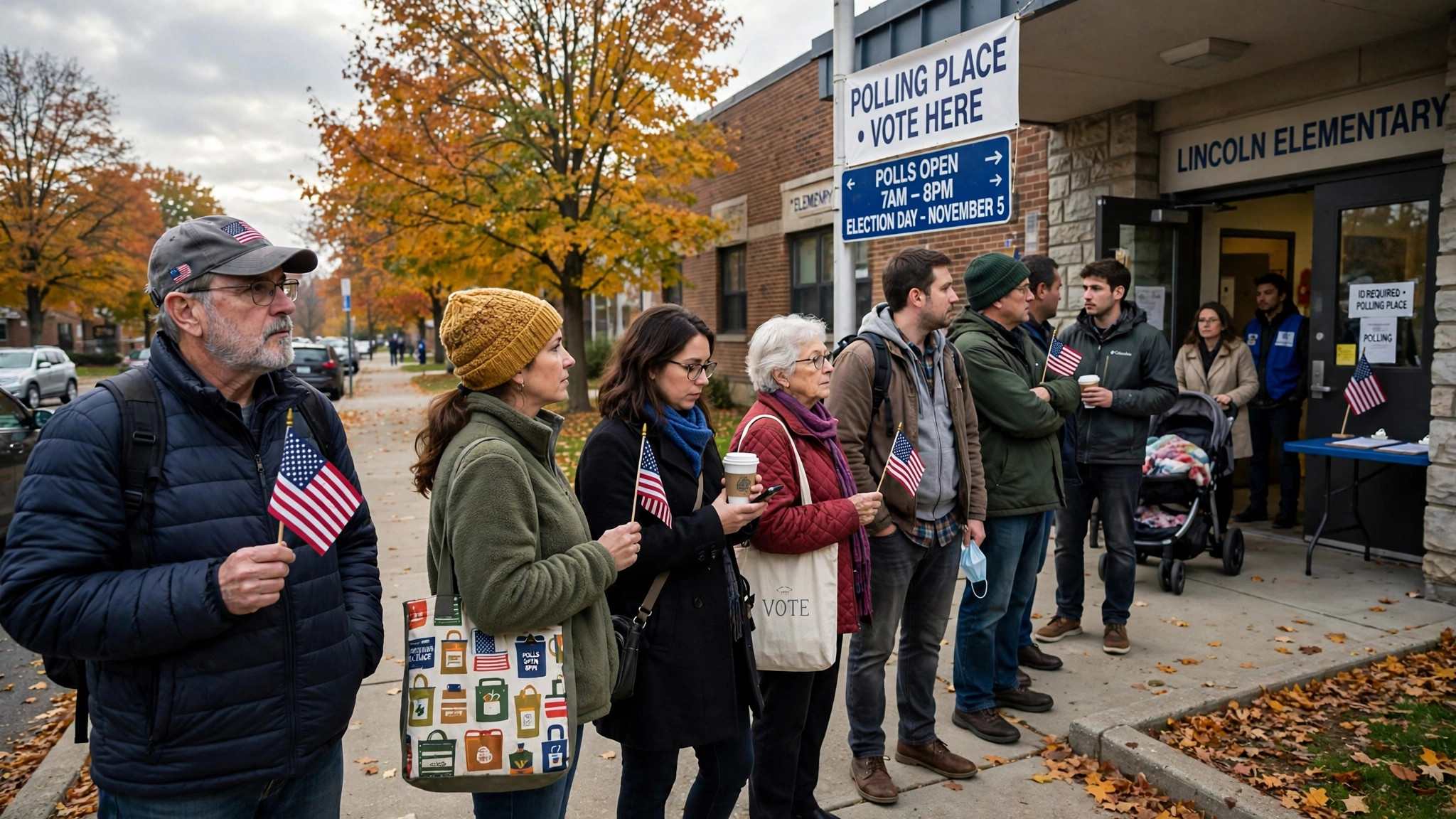
These are snapshots of voter preference, not predictions of individual races. The generic ballot asks voters which party they would support in their congressional district; it does not decide any single House race, where district boundaries, candidates and local conditions matter.
The House: Democrats’ to Lose
For control of the House, 218 seats are needed. Forecasters and markets both point the same way. Prediction markets give Democrats a 92 to 93 percent chance of winning the House, while Decision Desk HQ’s forecast model puts the figure at 80 percent, projecting 238 seats. The Cook Political Report projects a Democratic gain of 12 to 22 seats, with Democrats favored in 218 seats. An NBC News analysis said the House “appears to be Democrats’ to lose,” while cautioning that Republicans still have a path to retaining their majority.
If Democrats take the House, the consequences reach far beyond domestic politics. A Democratic majority could increase scrutiny of the administration’s foreign policy, military spending and arms transfers — including the post-midterm Iran plans that Washington has reportedly drawn up — and could constrain war funding and oversight just as major decisions reach the president’s desk.
The Senate: Seven Races Will Decide It
The Senate is a different story. Republicans currently defend a 53-seat majority, meaning Democrats need a net gain of four seats for outright control. Prediction markets price Democrats’ chance of Senate control at 68 percent, while Decision Desk HQ moved them from 57 to 60 percent this week and projects 52 seats. The Cook Political Report rates all seven decisive races as toss-ups.
Those seven states are Texas, Ohio, Iowa, Maine, Michigan, Alaska and Kansas. Polling Forecast’s October 28 model has Texas, Ohio and Iowa effectively at toss-up levels, while Maine and Michigan lean Democratic and Kansas and Alaska lean Republican. In Ohio, the RealClearPolling average showed former Democratic Senator Sherrod Brown leading Republican Senator Jon Husted by 3.1 points, 47.4 percent to 44.3 percent. In Iowa, Republican Ashley Hinson leads Democrat Josh Turek by just 0.1 points in the polling average.
Election Integrity Fights in the Final Days
The closing days have also brought election-integrity clashes. A California federal judge barred the Justice Department from threatening election workers or demanding ballot segregation just three days before the midterms. In Alaska’s Senate race, federal prosecutors issued dozens of subpoenas over allegations about a look-alike candidate, and the Justice Department asked a federal court to segregate ballots, seeking a ruling by Monday. Vice President JD Vance, campaigning on Friday, urged Americans to vote Republican, warning that Democratic victories would change the administration’s immigration policies.
What to Watch on Election Night
Three things will tell the story first. One, whether the Democratic generic-ballot lead of around eight points holds up in actual House results, or narrows in competitive districts. Two, whether the Senate toss-ups break toward Democrats in Texas, Ohio and Michigan, or hold for Republicans in Iowa, Alaska and Kansas. And three, whether turnout in the final days matches the enthusiasm the polls suggest — because polls measure preferences, not votes cast.
The 2026 midterm predictions agree: the House leans Democratic, the Senate leans Democratic but narrowly, and nothing is decided until the ballots are counted on Tuesday.