Trump Says US Could Strike Iran ‘Tomorrow’ or Reach a ‘Big, Beautiful’ Deal as Tensions Soar
US President Donald Trump has said the United States could launch a new military strike on Iran as soon as “tomorrow” — or reach what he called a “big, beautiful” agreement with Tehran instead. The warning, delivered to reporters on Saturday, October 24, has put the Middle East on edge again, just days after reports that Washington and Israel had drawn up plans for renewed strikes.
“We’re thinking about doing it, and maybe tomorrow,” Trump said when asked how close the US was to another attack on Iran. Pressed on whether a decision had been made, he refused to say more. “Do you really think I’m going to tell you whether I’ll do it?”
A deal is still on the table — with a catch
Trump left both doors open. He said Iran could still avoid further military action by reaching an agreement with Washington, but questioned whether Tehran would keep its word.
“They want to make a deal, but the problem is, will they hold the deal?” he said.
The president said his objective was to make sure Iran can never develop a nuclear weapon, arguing that the earlier American operation involving B-2 bombers was not enough to settle the matter for good.
“I’ve got to make it permanent,” Trump said. “That’s the only reason I’m doing this.”
He closed with a characteristically blunt summary of the two paths: “I may have to finish it off, or maybe they’ll make a deal. But I’m not sure. Either way, we win.”
The military pieces are already moving
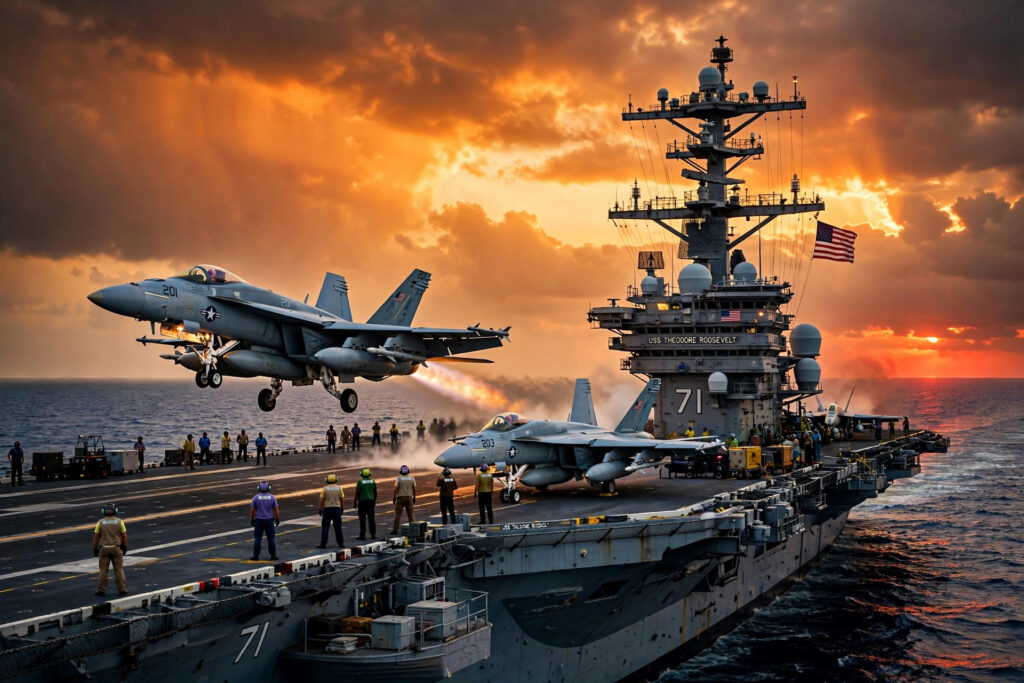
Behind the rhetoric, the military preparations are visible. US Central Command has drawn up multiple strike options for Defence Secretary Pete Hegseth, and the carrier USS George Washington is restocking missiles in the region, according to the Wall Street Journal. The US Ambassador to Turkey, Tom Barrack, added fuel to the speculation, saying on a podcast: “Could there be a strike this weekend? Absolutely.”
No new strike has been ordered, according to current reporting — but the signals from Washington have swung sharply in a matter of days. At a rally on Friday, October 23, Trump told supporters the US might “do another little Epic Fury,” using the codename of the US-Israeli operation against Iran launched on February 28. That war, which began in February, remains unresolved despite a ceasefire and efforts to finalise a peace agreement.
Tehran responds — and the clock ticks toward the midterms
Iranian officials responded on Sunday, October 25. Foreign Minister Abbas Araghchi said Tehran was reviewing the US response to its seven-day plan to reopen the Strait of Hormuz, the narrow waterway through which a huge share of the world’s oil passes. Parliament Speaker Mohammad Bagher Ghalibaf also weighed in, while President Masoud Pezeshkian has previously called the negotiations “futile.”
Washington’s own conditions remain steep. Vice President JD Vance has said Iran must make a “meaningful” reduction in its uranium enrichment capacity as part of any agreement.
Trump also claimed that oil shipments through the Strait of Hormuz had increased compared with levels before the war began, though he offered no figures. Data cited by Al Jazeera paints a darker picture: October has been the worst month for shipping since the war started, with more than 120 reported attacks.
Mixed signals before November 3
The timing matters. The United States heads into midterm elections on November 3, and Trump has previously said a wider move may wait until after the vote — even as he now floats a strike within a day. His statements on Iran have reversed within a day or two before: in June he cancelled planned strikes hours after threatening them, and in early October he said a deal was not something he wanted, only to say a day later that the US would not attack before the midterms.
For now, the region waits on a single question: will Sunday’s deadline pass quietly, or will “tomorrow” arrive with a strike? Until either government confirms the next step, the warning itself is the story — and markets, militaries, and millions of people across the Middle East are watching it unfold.