Israel Election Results 2026: Netanyahu and Eisenkot Face a Deadlock
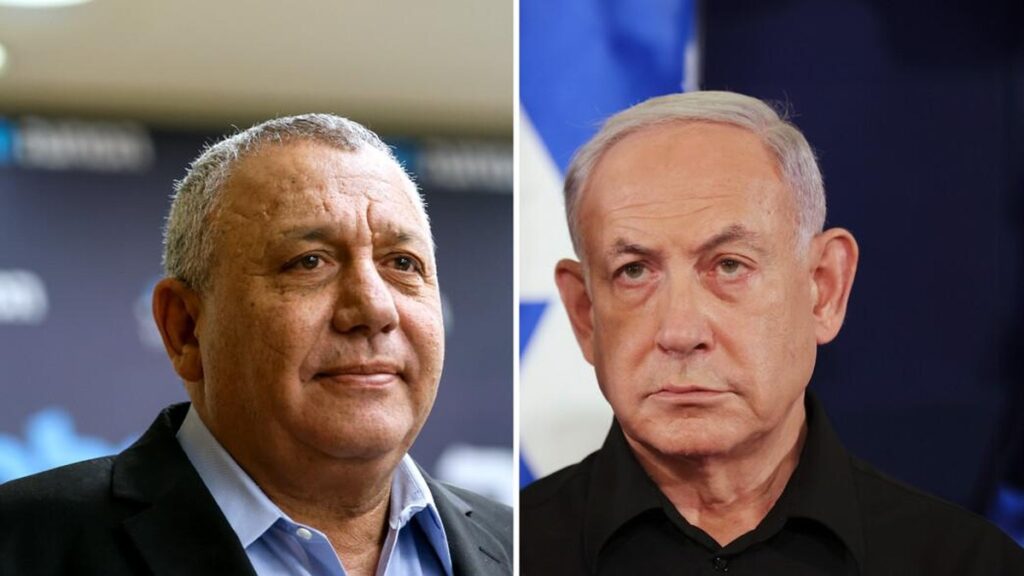
Israel election results 2026 have left Prime Minister Benjamin Netanyahu and opposition leader Gadi Eisenkot facing a difficult battle to form the next government. Early exit polls suggest that neither political bloc has secured the 61 seats needed for a majority in Israel’s 120-member Knesset, while Arab-led parties could play an influential role in coalition negotiations.
The inconclusive result sets the stage for potentially weeks of political bargaining as party leaders seek enough support to govern. Official vote counting is continuing, and the final distribution of seats may differ from the initial projections.
Israel Election Results 2026: What the Exit Polls Show
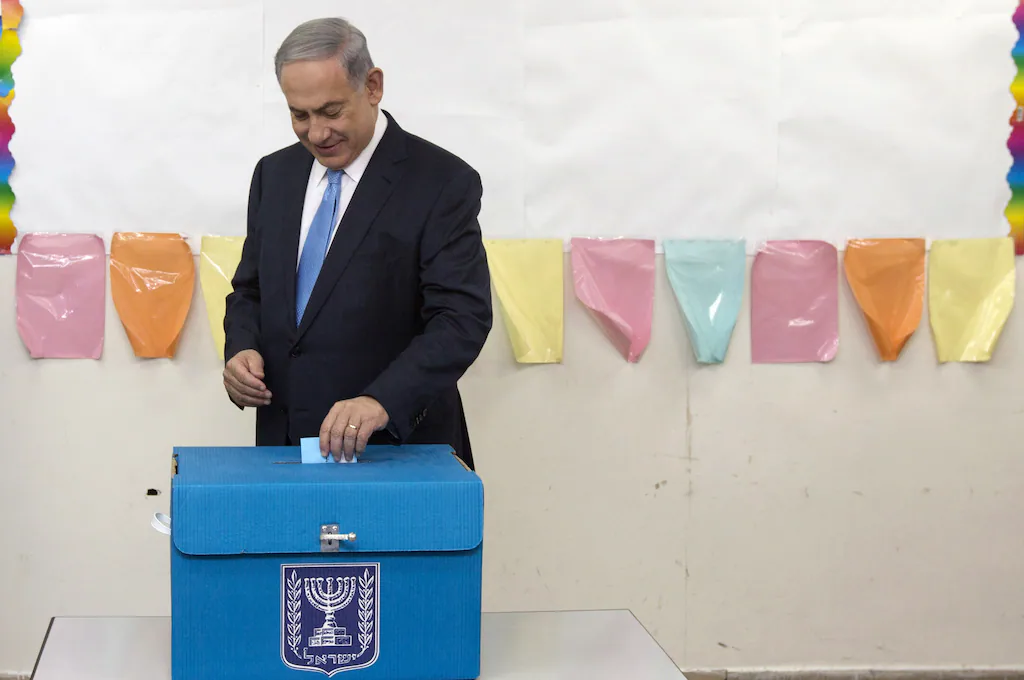
Israel’s general election took place on October 27, 2026, amid deep divisions over Netanyahu’s leadership, national security and the aftermath of the October 7, 2023, Hamas-led attacks.
According to Israel’s Central Elections Committee, voter turnout reached 77.7 percent by the close of polling at 10 p.m. local time. That was the highest turnout at that hour since 1999 and significantly above the 70.6 percent recorded at the same point during the 2022 election. About 330,000 young Israelis voted for the first time, and turnout was especially high in Arab communities.
The night itself was a story of reversals. When polls closed, the first exit polls put Eisenkot’s opposition bloc ahead at 52 to 53 seats, against 50 for Netanyahu’s bloc. Revised exit polls from Channel 13 and Kan 11 then tied the blocs at 51 seats each. By Wednesday morning, the early count pointed to around 57 seats for Netanyahu’s bloc against 47 for the opposition, with more than 40 percent of votes counted. These are early, partial figures, not a final seat distribution, and the projected balance can still change as ballots are counted.
These figures are projections rather than final election results. As ballots are counted, the projected balance of seats can change, making it important to distinguish exit polls from the official tally.
Netanyahu’s Likud Leads, but a Majority Remains Uncertain
Netanyahu’s Likud party emerged as the largest single party in the initial projections, with roughly 27 to 28 seats, ahead of Eisenkot’s Yashar party at around 21. That gives the prime minister a basis for arguing that his political camp should have an opportunity to form the next government.
However, winning more seats than any individual rival party does not automatically guarantee control of the Knesset. Israel uses a proportional electoral system in which parties must negotiate with other factions to assemble a governing coalition.
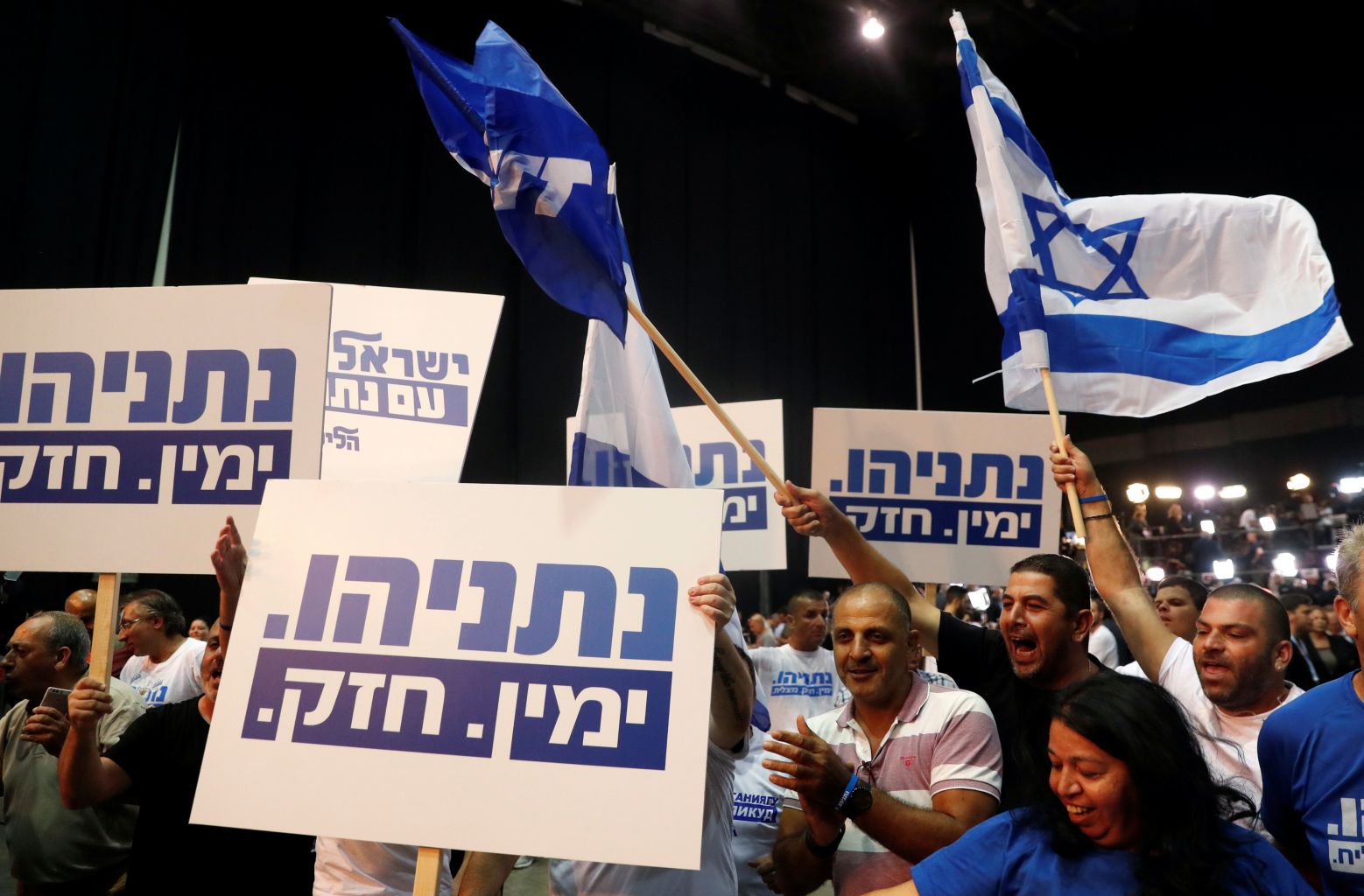
Addressing supporters in Jerusalem at 3:15 a.m., a visibly buoyed Netanyahu called Likud the “largest party” and said it “must form a strong right-wing government.” He warned against any government “backed by anti-Zionist Arab parties” and called the results “merely a prelude.”
With the main blocs falling short of a majority in the early projections, Netanyahu faces the challenge of securing support from enough smaller parties to reach 61 seats. His position could limit his negotiating options if his existing political partners cannot provide enough seats. The official count remains essential to determining the strength of his negotiating position.
Arab Parties Could Influence Israel’s Coalition Talks
Arab-led parties emerged as a significant factor in the early election projections. Together, they were projected to win approximately 17 to 19 seats — the strongest showing in their history — although the precise total depends on the final count.
Joint List chairman Yousef Jabareen called it “a historic day,” saying Arab voters had “proven that we are a political force that cannot be ignored.”
Their potential influence comes from the narrow gap between the main political camps. If neither Netanyahu’s bloc nor the opposition can independently assemble a majority, smaller parties could become important to negotiations over the next government.
However, electoral influence does not automatically translate into participation in a governing coalition. Eisenkot has set conditions for any partner joining his government, including recognizing Israel as a Jewish state and recognizing Hamas as a terrorist organization that must be dismantled — terms most Arab lawmakers are unlikely to accept. Two of his opposition allies, Avigdor Lieberman and Naftali Bennett, have ruled out forming a government with the Arab parties altogether.
For Gadi Eisenkot and his allies, the challenge is particularly complicated. They must find a viable route to 61 seats while navigating disagreements over whether and how Arab-led parties could support a future government. The outcome of these negotiations may prove as important as the final seat count.
Who Is Gadi Eisenkot?
Gadi Eisenkot is a former chief of staff of the Israel Defense Forces and the leader of the centrist Yashar party. He has emerged as Netanyahu’s principal challenger in an election that has left the country’s political future uncertain.
Eisenkot, 66, lost a son fighting in Gaza. He is cast by analysts as everything Netanyahu is not: direct, unpolished, media-shy, and disciplined like a military commander. His centrist Yashar party’s name sits somewhere between “honest” and “straight.” Four years ago, he was not even a politician.
After the initial exit polls were released, Eisenkot hailed the projections, calling the result “a complete vote of no confidence in Netanyahu and the October 7 government” and saying “we made history.” But his ability to replace Netanyahu depends on more than the performance of his own party. He must persuade potential partners to cooperate and secure enough parliamentary support to form a government. Without an agreement among opposition parties and other possible partners, even a strong electoral showing may not be sufficient.
How Does Israel Form a Government After an Election?
Israel’s 120-member Knesset requires a majority of at least 61 seats to support a government.
After the official results are published — expected by November 4 — President Isaac Herzog consults party representatives and selects the lawmaker he believes has the best chance of forming a government. That lawmaker then has a 28-day deadline, with a likely 14-day extension, to negotiate a coalition.
That is not necessarily the leader of the largest party, but rather whoever the president thinks is most likely to assemble a 61-seat majority. Because Israel’s proportional electoral system distributes seats among multiple parties, coalition negotiations can be complicated and may take weeks.
If a candidate cannot secure sufficient support, the process may move to another candidate or eventually lead to another election. Until a new government is formed, Netanyahu and his cabinet can continue in a caretaker capacity.
What Happens Next in Israel’s Election?
The immediate priority is the completion of the official vote count. The final results will determine the number of seats won by each party and clarify which coalition combinations are mathematically possible.
Netanyahu may seek to consolidate support among right-wing and religious parties, while Eisenkot and his allies will look for partners capable of helping them assemble a majority.
Arab-led parties could influence the negotiations, but their final role will depend on the arithmetic of the Knesset and the political conditions set by potential coalition partners.
The election also carries implications for Israel’s security policy and its relationship with the United States. US President Donald Trump endorsed Netanyahu nine days before the vote.
For now, the election has not produced a decisive answer about who will lead Israel next. The official results and subsequent coalition negotiations will determine whether Netanyahu remains in power, Eisenkot succeeds in building an alternative government, or the political deadlock eventually leads to another election.
The central question is no longer simply which party wins the most seats. It is whether any leader can assemble the parliamentary majority needed to govern.